How personalized emails increased weekly shopper spending for this regional grocer
Industry:
Grocery
Location:
Central, United States
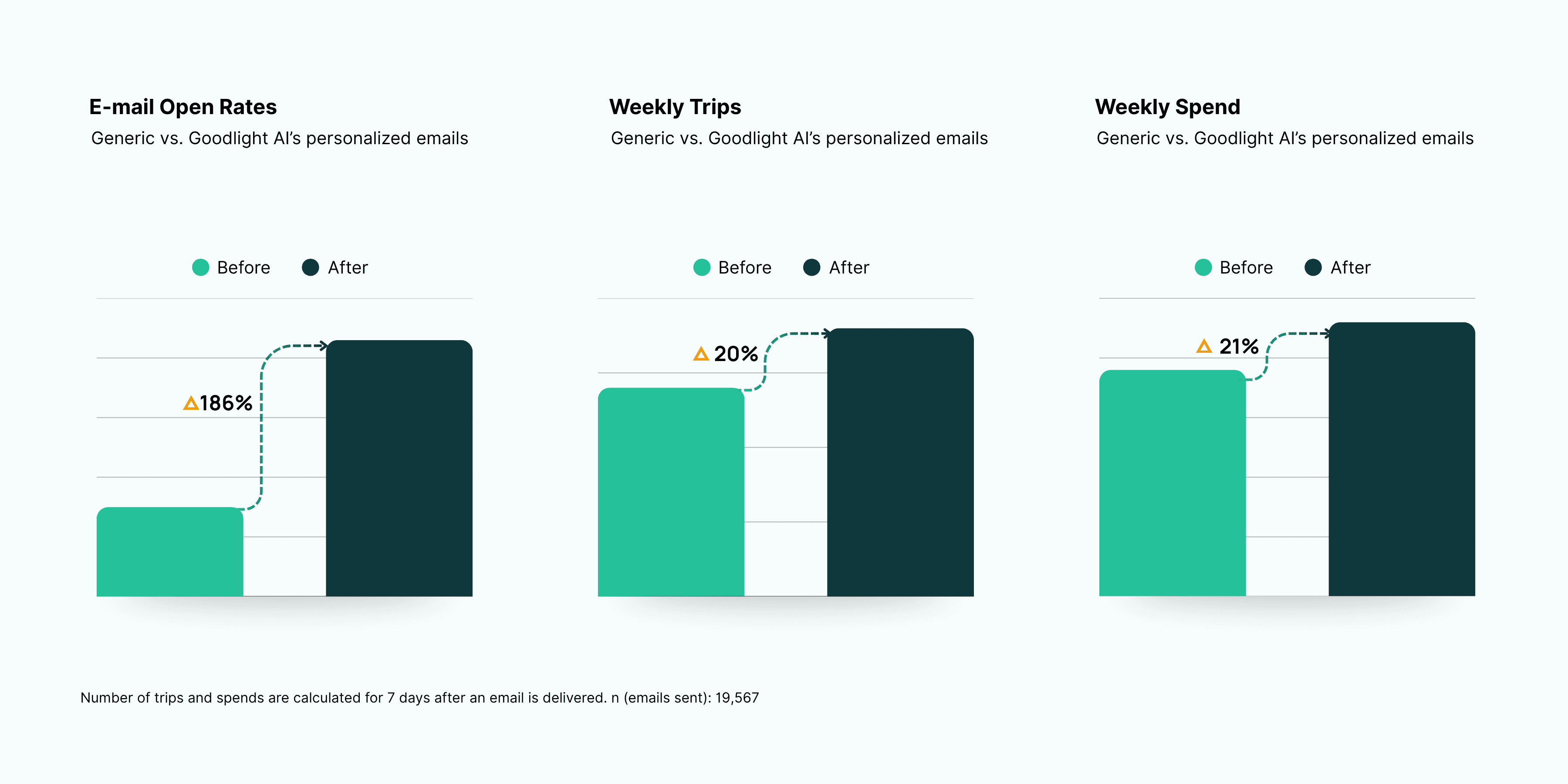
21%
Increase in weekly spending
20%
Increase in weekly trips
The problem: what happened?
A regional grocery chain was experiencing declining sales, with slowing customer acquisition and retention due to a wide range of economic and business reasons. They had a loyalty program in place, but it was yet to show results: in some stores, as many as 40% of loyalty customers had never done a repeat purchase.
What Goodlight AI found.
Goodlight AI’s analysis found some key areas of improvement:
Inactive loyalty shopper cohorts
In an initial analysis, Goodlight AI’s analysis found that—in some stores—over 40% of the loyalty shoppers had only purchased once in the last 12 months. This revealed a huge opportunity to win back inactive shoppers through better engagement with shoppers who had already indicated an affinity toward the brand.
Ineffective engagement of loyalty shoppers
Goodlight AI analyzed the results from 600,000 generic marketing emails sent to loyalty IDs within a 30-day period. And found that sending generic messages actually reduced the shopper spending for champions and loyalists—the most valuable segment of shoppers for the regional chain.
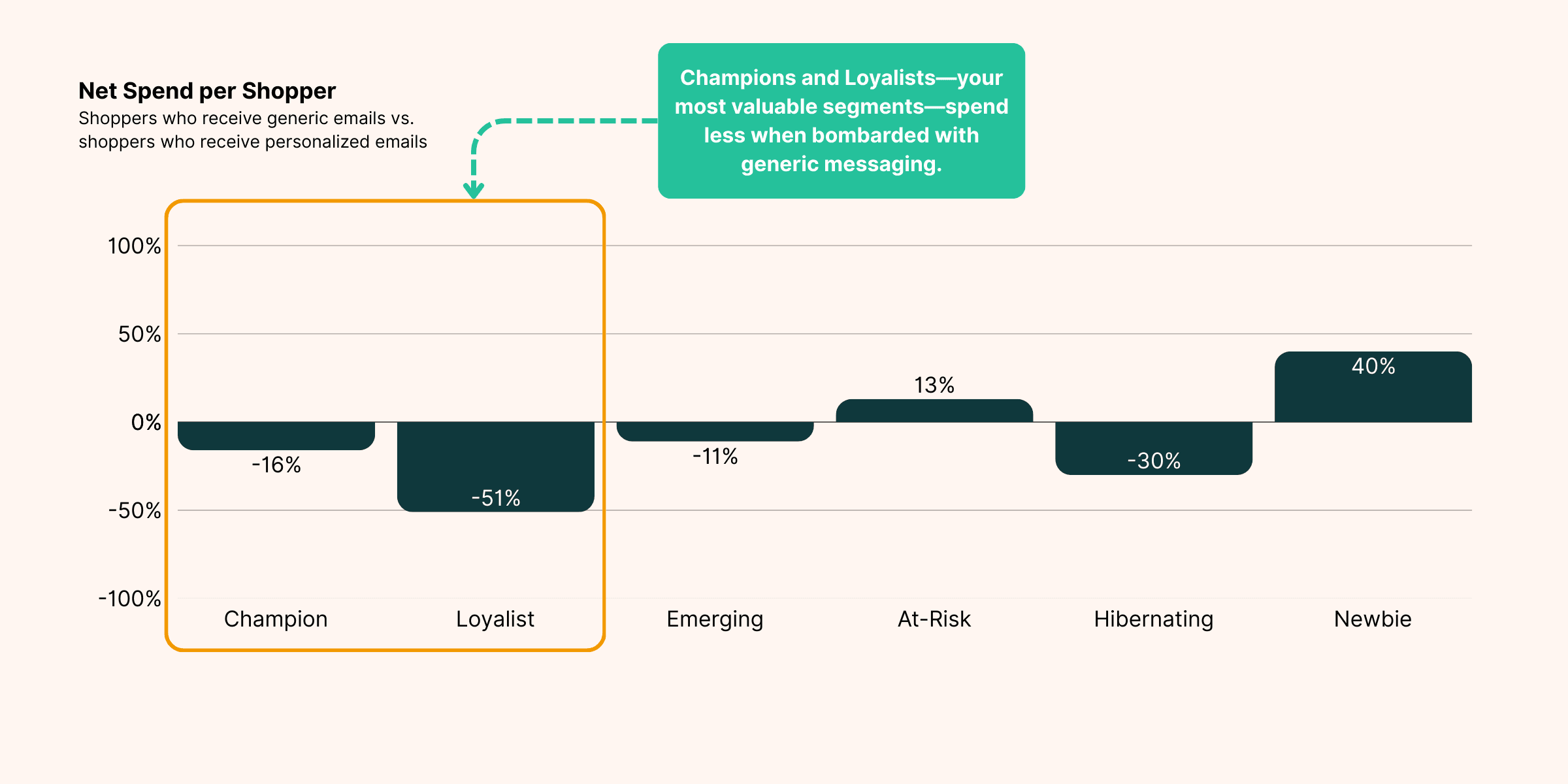
Our research also found that a grocer’s most loyal customer spends as much as 18x more per month than a new customer. Bombarding your loyal customers with irrelevant communication sends the message that you don’t know (and don’t care) about them. Sending generic daily emails to your most loyal customers could be leading to a potential loss of 6% of store revenue every month.
How Goodlight AI handled the challenge
Step 1: Segmentation with Machine Learning
Goodlight AI started with using POS and loyalty data to understand the shopper base more intimately. Using advanced machine learning techniques, Goodlight AI’s model design Segments and Personas for each loyalty shopper:
Design Segments based on how shoppers buy—Goodlight AI used a recency, frequency, monetary spend framework to rank customers based on their purchase behavior. Champions and Loyalists were identified as the most valuable segment of shoppers, while others needed to be reengaged further to ensure they kept coming back to the stores.
Design Personas based on what shoppers buy—Goodlight AI’s ML model categorized each shopper into one of nine personas based on the items that they buy during their shopping trips.
Step 2: Cart Prediction
Following this, the Goodlight AI machine learning model predicts when the shopper will make their next trip and what items they are likely to purchase in their next trip.
Step 3: Personalized Communication with Loyalty Shoppers
The segment, persona, next purchase, and potential trip date feed into our AI model to create a personalized email for every loyalty shopper. It acts as a nudge to get them back to the store, without offering a discount.
Results
Goodlight AI sent batches of 1,000, 5,000, and 20,000 personalized emails to a cross-section of the loyalty shoppers. Compared to those receiving generic emails, the shoppers who received the personalized emails:
Were more likely to open the personalized emails (186% more)
Made 20% more trips to the store
Spent 21% more within a 7-day period