Personalization is the Engine Behind Higher Shopping Frequency
Effective messaging feels like service, not sales.

Salima Nadira
Last week, we argued that grocers should focus less on basket size and more on the metric that actually predicts annual revenue: how often a customer shops. Frequency compounds. One or two extra visits a month is worth far more than squeezing a few extra dollars out of any single trip.
So the real question becomes: what reliably increases frequency?
The answer is surprisingly simple: personalized communication.
Why Personalized Messages Drive More Trips
1. They reduce decision friction
Most grocery trips aren’t planned events; they’re triggered by running low, convenience, or habit. Personalized messages remove the mental load of “what do I need?” and “when should I go?” A reminder like “You usually buy cereal every 10 days, here are your usual brands” turns a vague intention into action.
Relevance speeds decisions, and speed increases trips.
2. They match natural replenishment cycles
Grocery buying is rhythmic. Milk, produce, snacks, baby products; each category has its own cadence. When a message lands close to the shopper’s personal replenishment window, it gently accelerates the next visit. You’re not pushing them to spend more; you’re nudging them to stay in their natural pattern.
That’s the heart of frequency: tightening the gap between trips.
3. They build loyalty that shows up as repeat behavior
Customers don’t feel loyal because the circular was big and colorful. They feel loyal because the store “gets” them; the brands they like, the categories they lean into, the snacks their kids always ask for. Personalized offers and recommendations reinforce the idea that this store is their store.
Loyalty isn’t an emotion; it’s a repeated action. And repeated actions raise frequency.
What Good Personalization Looks Like
It’s not creepy. It’s not complicated. It’s not a 600-segment CDP science project. It’s practical, everyday relevance:
Replenishment reminders:
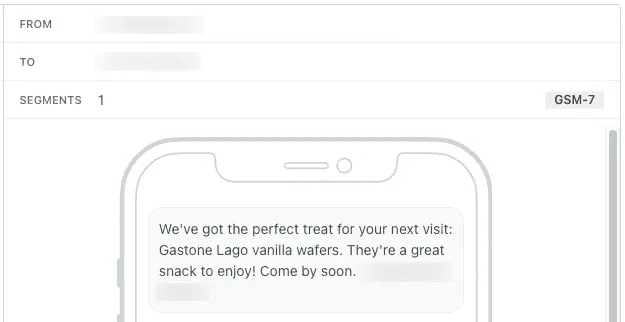
“Running low on sparkling water? Add to next order.”
Already possible with e-commerce, or via SMS nudges.
Tailored weekly circulars:
Same circular, but sorted for each customer. Top items reflect their actual buying history.
Perfect for email; however, the current format of weekly ads needs major revamping.
Persona-based nudges:
Dog owners get dog food and treat deals. Health seekers get produce and low-sugar swaps. Large families get bulk sizes and school-lunch staples.
Goodlight AI is already doing this!
Reward reinforcement:
Coupons for the categories a shopper already buys; not scattershot discounts that clutter the message.
Already possible; send only relevant coupons to clip via email or SMS.
Consumers respond to messaging that feels like service, not sales.
Why Personalization Outperforms Traditional Promotions
Promotions will always have a place. But they mostly deliver spikes. Spikes don’t build long-term revenue.
Personalization builds velocity, shortening the time between trips. That’s where sustainable growth comes from.
A shopper who moves from every 9 days to every 7 days adds more to annual revenue than any single promotion ever could. And because the messages are targeted, engagement stays high and marketing waste stays low.
This is especially powerful for independents, who don’t have the resource advantage of Walmart or Target. Personalization is how they compete.
Sign up for our insights
What Grocers Need to Make This Work
You don’t need a massive data overhaul. You need:
Clean transaction history
A reliable loyalty ID (minus the non-loyalty ghost IDs)
Simple models that estimate cadence, affinities, and replenishment timing
A communications engine that can trigger messages when they matter
The return on even lightweight personalization is disproportionate: a 5–8% lift in visit frequency is entirely achievable, and transformative.
Results
Here’s what an independent grocer saw after launching personalized communication with Goodlight AI:
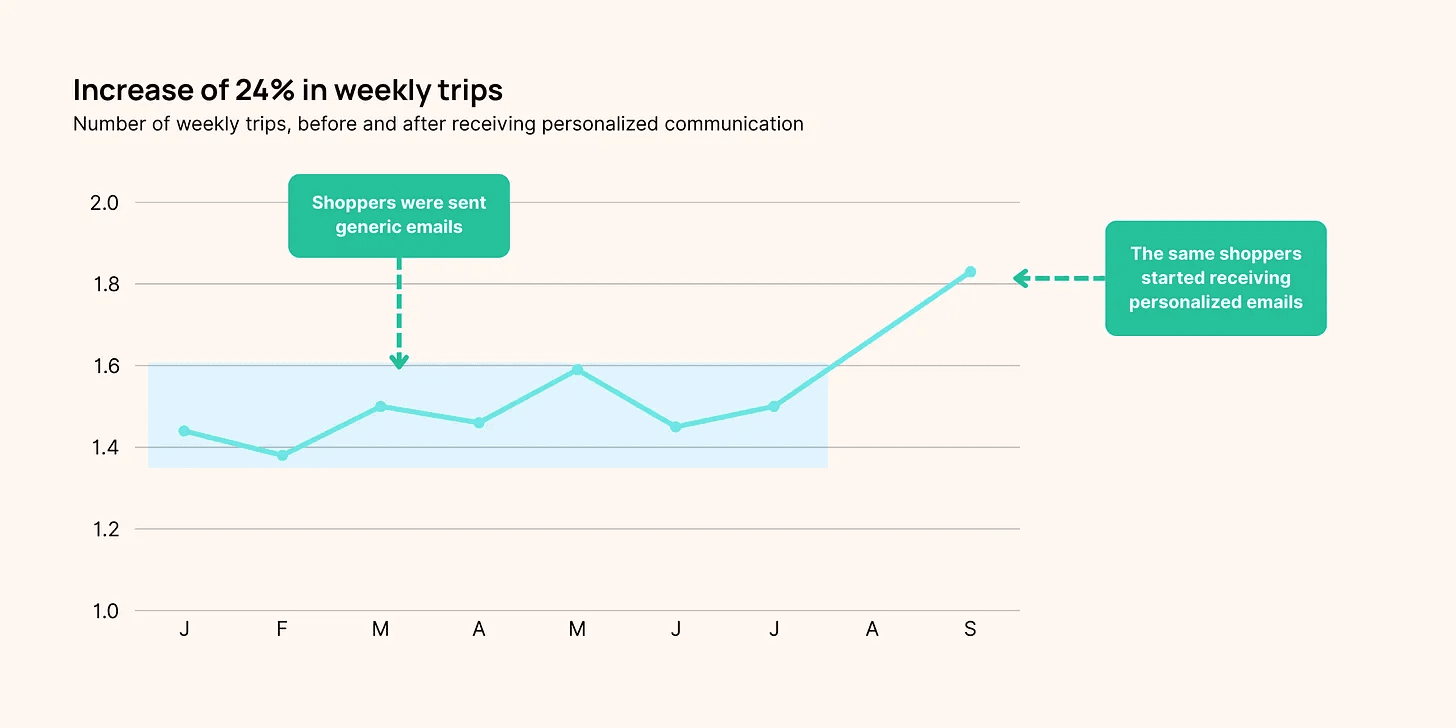
A select group of shoppers returned to the store 24% more times after receiving personalized communication from Goodlight AI.
This also led to a 21% increase in weekly average spend.
The Bottom Line
Grocers don’t need more discounts.
They need more relevance.
When shoppers feel seen and served, they come back more often. More frequent trips drive more annual revenue. And personalization is the most reliable lever to get there.
If basket size tells you what a customer spent today, frequency tells you what they’ll spend all year. Personalization is how you influence it.
Want to see some examples of personalized messages we’ve sent? We’re happy to share; let’s talk.