Stop Pushing Shoppers To Spend More
Do this instead.

Saptarshi Nath
Walk into any grocery store today and you’ll experience loud sale announcements, flashy discounts, and constant nudges to buy one more thing.
Grocers are obsessed with squeezing every dollar out of a single visit.
That’s the wrong strategy. And we have the numbers to prove it.
Don’t push for bigger baskets. Push for more visits. A shopper spending $100 once is worth less than one who spends $70 twice.
And with AI, achieving this is easy. We’ll talk about how at the end.
The Basket Size Obsession
Most grocers track one number religiously: average basket size. In 2024, the average was between $131/trip (for single-person households) and $262/trip (for families of 5+).
Grocers redesign store layouts to make you walk further. They move products around so you hunt and grab items you wouldn’t have. They put candy at checkout. They run buy-one-get-one deals on items you never needed.
Every tactic aims at making the shopper spend more before they leave.
But here’s what’s easy to miss. A shopper who spends $174 once gives you $174. A shopper who spends $90 three times within the same time period gives you $270.
Why Trip Frequency is Important
Customer Lifetime Value (CLV) is the key metric you should be focusing on.
CLV quantifies the total value a customer brings to your business throughout their relationship with your brand. By understanding the CLV, you can make informed decisions about customer acquisition costs, retention strategies, and customer segmentation.
Customer Lifetime Value = Average Order Value × Annual Purchase Frequency × Average Customer Lifespan
Notice what matters most in the above equation. It’s not just how much someone spends. It’s also how often they come back and how long they stick around.
Let’s look at what happened in the UK. Shoppers started visiting stores five times per week. Their basket size dropped 4% to just £18.62. Retailers initially panicked about smaller baskets. But total volume grew 1.4%. More trips meant more items sold. Smaller baskets didn’t kill revenue, but grew it.
A shopper making frequent trips builds habits. They think of your store first. They stop by on their way home from work. They grab lunch items. They pick up dinner ingredients. Each visit is a touchpoint. Each touchpoint strengthens the relationship.
If someone only swings by once a month, that leaves four weeks for you to slip from their mind. That’s four weeks they could walk into a competitor’s store instead. By the time week five rolls around, you’re not even on their radar anymore.
How to Drive More Trips:
Personalized Engagement
Stop designing for the one-time, big haul. Grocers will do well to focus on tactics that gets shoppers into the store more often. Step 1 is to ensure your Loyalty Program is set up for success. Don’t simply sign up shoppers on to your Loyalty Program and forget about them.
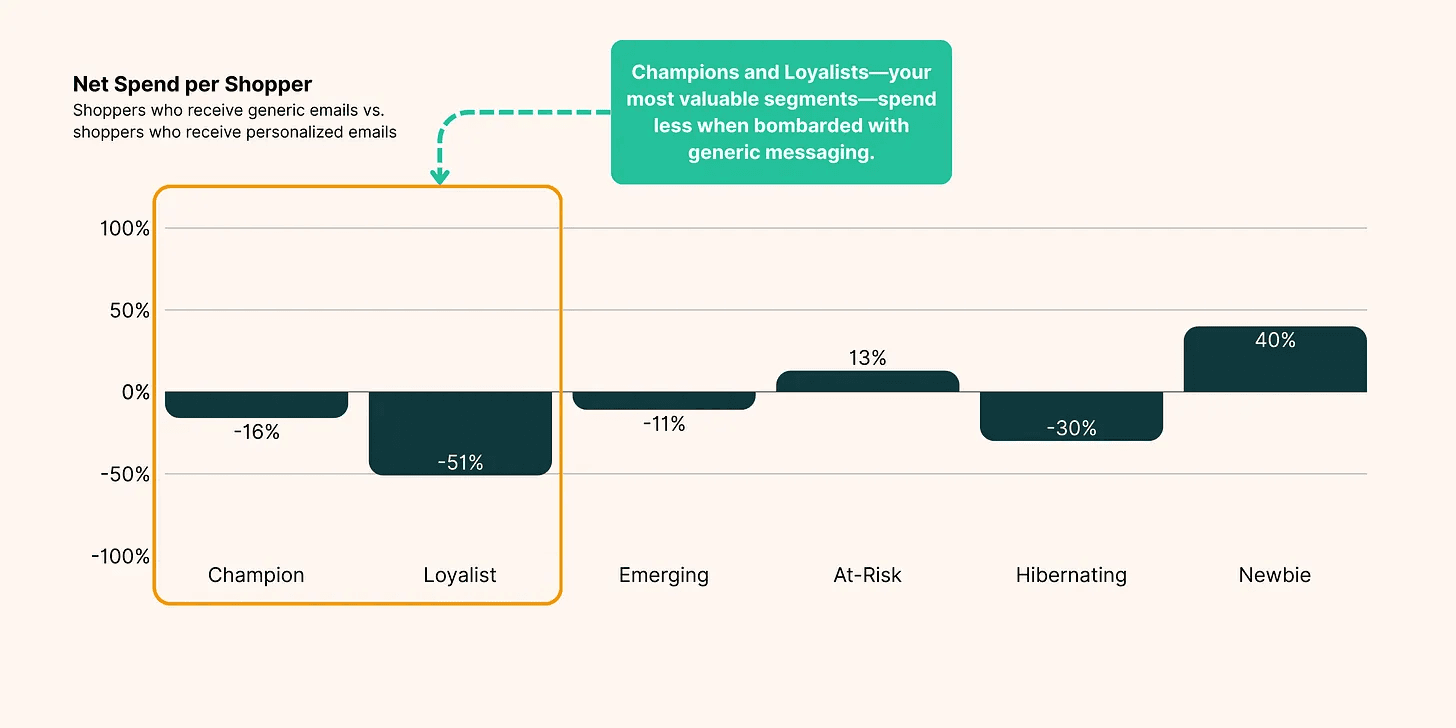
Goodlight AI research of over 120,000 emails sent to Loyalty Program members found that sending generic emails hurt your most valuable customers. The first step to driving more trips is to stop those pesky generic emails.
Sign up for our insights
So what should you do instead? Here is a good place to start:
Use personalized offers that are time-bound. Kroger’s loyalty program sends members personalized discounts based on purchase history, giving them a reason to come back every week. Flash sales work the same way. A 24-hour deal on chicken breasts gets the shopper through your door on Tuesday instead of Saturday, increasing the frequency of visits.
Give shoppers a reason beyond groceries. Host cooking demos. Run nutrition workshops. Send personalized recipes by email. Create tasting events. When someone comes in for a cooking class, they buy ingredients while they’re there. They then come back next week because they enjoyed the experience.
Reward frequency, not (just) spending. Traditional loyalty programs reward big spenders. Flip that script and give points for every visit instead, regardless of basket size. Offer a free item after five visits. Create challenges: “Visit us three times this week and get 10% off your fourth trip.”
Stock for top-up trips. People make frequent trips when they need frequent items. Fresh produce. Bread. Milk. Coffee. Make these sections prominent. Keep them stocked perfectly. Price them competitively. These are your trip drivers. Lose on margin here if you must. You’ll make it back on the additional items they grab.
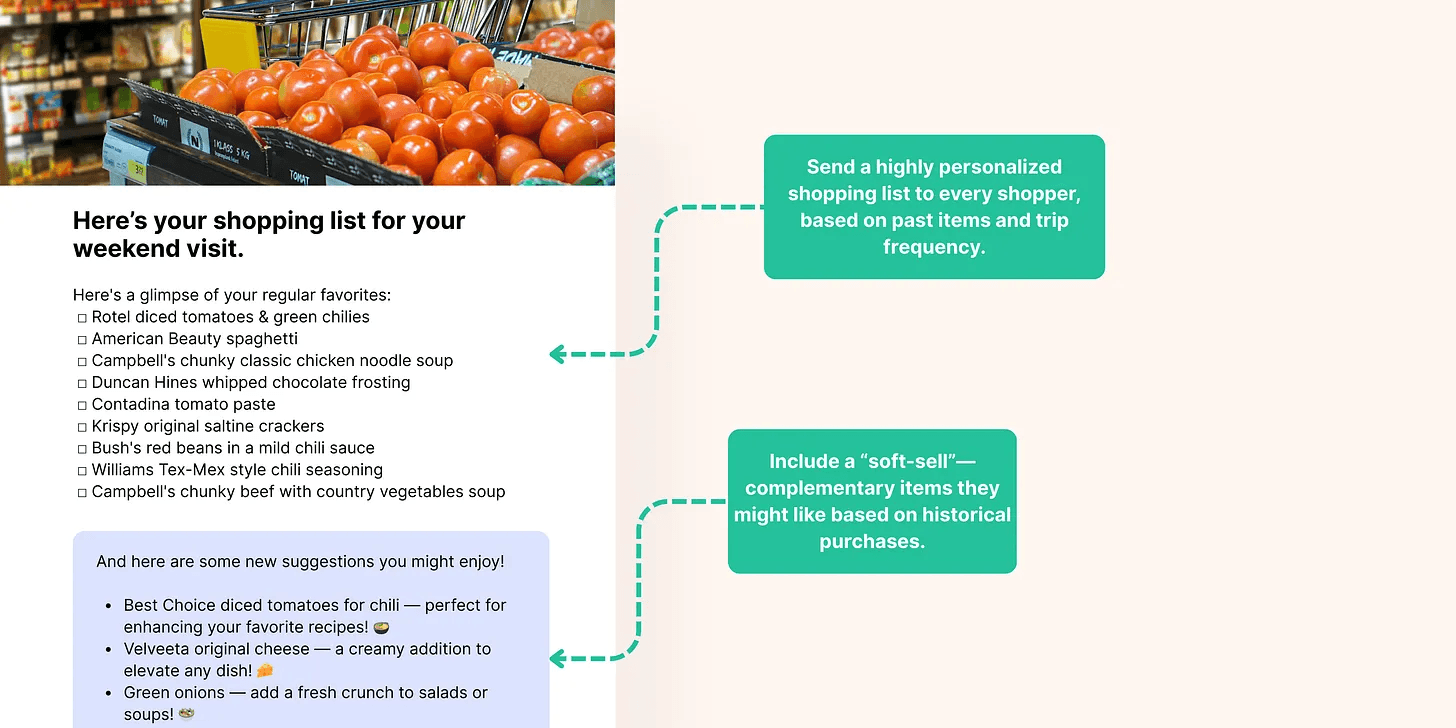
Send reminders that feel helpful. You bought chicken last Tuesday. Here’s a recipe for tonight. Your favorite yogurt is back in stock. You usually buy coffee on Thursdays. Technology makes this easy. Predictive tools (like Goodlight AI) can send curated shopping lists right when shoppers typically shop.
Leverage AI to Launch Campaigns at Scale
AI is already making it easy to analyze, identify, and target shoppers with hyper personalized, just in time messages that bring your shoppers back more often.
Platforms like Goodlight AI automate the sending of personalized reminder messages based on shoppers’ actual historical purchase patterns, increasing trips without even a need to offer discounts.
AI can also easily deliver offers by your suppliers or your company to the right audience at the right time. Rather than a blanket generic ad, this personalized offer delivery is targeted, trackable, and much more effective.
What’s more, AI can adapt marketing messages according to what worked and what didn’t, or changes in a shopper’s behavior.
The Real Win
Shopping behavior is habitual. You don’t choose a new grocery store every week; you default to one where you feel welcomed, a store that values your time and loyalty.
Basket expansion strategies make shopping feel like a chore. When you know you have to spend $200 on the trip, you visit only when you must. You stock up to avoid coming back. You dread the time and money it takes.
Frequent trip strategies make shopping feel normal. It’s part of your routine. You stop by without thinking. The store becomes part of your life, not an obligation.
That’s how you build a relationship with your shopper.
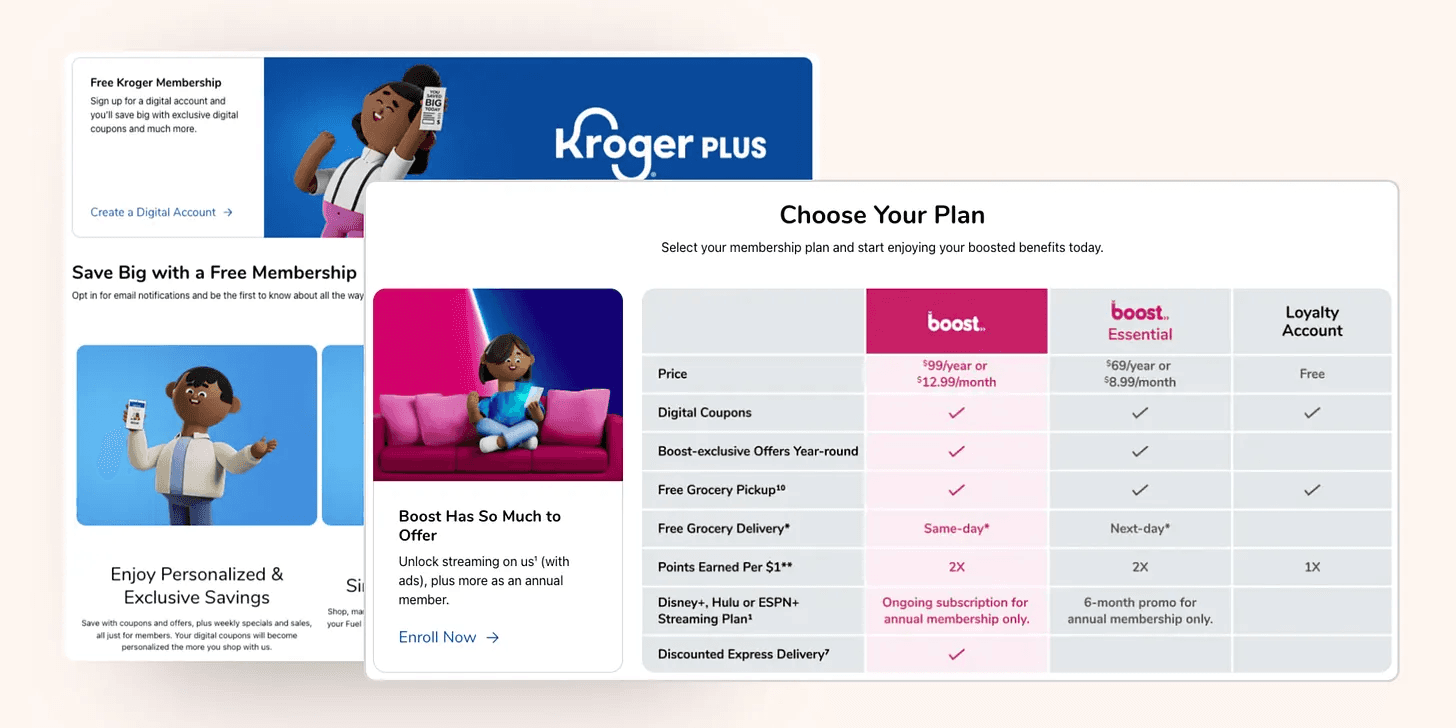
Kroger figured this out with their Kroger Plus loyalty program. They even launched Kroger Boost, a paid program offering extra benefits like free delivery. Loyal shoppers are willing to pay for the privilege of shopping there more often.
Boost members transact three times as frequently as the average Kroger shopper across Kroger’s top seven banners. Thanks to the increased frequency, Boost members also spend 4.5x more annually than average customers.
Stop trying to own the basket. Start trying to own the week.
If you’re trying to boost customer loyalty through the power of personalized touchpoints at scale, but don’t have the budget of big-box retailers like Kroger, hit us up for a free consultation.